
Nota: Ingredientes incluidos en la lista de productos químicos restringidos
EC/CAS
616-576-7/7791-20-0
Nombre del producto químico
Nickel(II) chloride hexahydrate (1:2:6)
Concentración
N/A
Información General
Fecha de revisión:
2021-07-27
A. Nombre del producto
EMSURE ACS
número CAS
7791-20-0
REACH Número de registro
no
1.5 Uso recomendado:
Análisis químico
Número de emergencia
900-868538 (CHEMTREC España
IÍconos en FDS


Información de la empresa
Empresa
Merck S.A. VE
Información GHS
Palabra clave
Peligro
Hazard Codes
Declaraciones de peligro (CLP)
H301, H301+H331, H315, H317, H331, H334, H341, H350i, H360D, H372, H400, H410
Declaraciones de peligro
Código
Declaraciones
H301
Toxic if swallowed
Sección 2
SECCIÓN 2: Identificación de los peligros
No 1272/2008 Classification of the substance or mixture Classification according to Regulation (EC) No 1272/2008 Acute toxicity, Oral (Category 3), H301 Acute toxicity, Inhalation (Category 3), H331 Skin irritation (Category 2), H315 Respiratory sensitization (Category 1), H334 Skin sensitization (Category 1), H317 Germ cell mutagenicity (Category 2), H341 Carcinogenicity, Inhalation (Category 1A), H350i Reproductive toxicity (Category 1B), H360D Specific target organ toxicity - repeated exposure, Inhalation (Category 1), Lungs, H372 Short-term (acute) aquatic hazard (Category 1), H400 Long-term (chronic) aquatic hazard (Category 1), H410 For the full text of the H-Statements mentioned in this Section, see Section 16. 2.2 Label elements Labelling according Regulation (EC) No 1272/2008
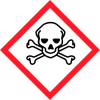
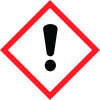
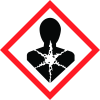
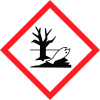
Pictogramas de peligro
Signal word Danger Hazard statement(s) H301 + H331 Toxic if swallowed or if inhaled. H315 Causes skin irritation. H317 May cause an allergic skin reaction. H334 May cause allergy or asthma symptoms or breathing difficulties if inhaled. H341 Suspected of causing genetic defects. H350i May cause cancer by inhalation. H360D May damage the unborn child. H372 Causes damage to organs (Lungs) through prolonged or repeated exposure if inhaled. H410 Very toxic to aquatic life with long lasting effects. Precautionary statement(s) P202 Do not handle until all safety precautions have been read and understood. P273 Avoid release to the environment. P280 Wear protective gloves/ protective clothing/ eye protection/ face protection/ hearing protection. P301 + P310 IF SWALLOWED: Immediately call a POISON CENTER/ doctor. P302 + P352 IF ON SKIN: Wash with plenty of water. P304 + P340 + P311 IF INHALED: Remove person to fresh air and keep comfortable for breathing. Call a POISON CENTER/ doctor. Supplemental Hazard none Statements Restricted to professional users. Etiquetado reducido (<= 125 ml)
Indicaciones de peligro
H334 Puede provocar síntomas de alergia o asma o dificultades respiratorias en caso de inhalación. H317 Puede provocar una reacción alérgica en la piel. H341 Se sospecha que provoca defectos genéticos. H350i Puede provocar cáncer por inhalación. H372 Provoca daños en los órganos tras exposiciones prolongadas o repetidas si se inhala. H360D Puede dañar al feto. H301 + H331 Tóxico en caso de ingestión o inhalación. Declaración(es) de prudencia P202 No manipular la sustancia antes de haber leído y comprendido todas las instrucciones de seguridad. P280 Llevar guantes/ ropa de protección/ equipo de protección para los ojos/ la cara/ los oídos. P301 + P310 EN CASO DE INGESTIÓN: Llamar inmediatamente a un CENTRO DE TOXICOLOGÍA/ médico. P302 + P352 EN CASO DE CONTACTO CON LA PIEL: Lavar con abundante agua. P304 + P340 + P311 EN CASO DE INHALACIÓN: Transportar a la persona al aire libre y mantenerla en una posición que le facilite la respiración. Llamar a un CENTRO DE TOXICOLOGÍA/ médico. Suplementaria ninguno(a) del Peligro
2.3. Otros riesgos
Esta sustancia/mezcla no contiene componentes que se consideren que sean bioacumulativos y tóxicos persistentes (PBT) o muy bioacumulativos y muy persistentes (vPvB) a niveles del 0,1% o superiores.