

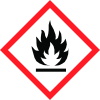
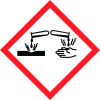
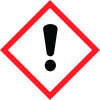
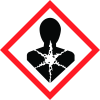
Nota: Ingredientes incluidos en la lista de productos químicos restringidos
EC/CAS
203-726-8/109-99-9
Nombre del producto químico
Tetrahydrofuran (618/2012)
Concentración
>=70-<90
EC/CAS
203-564-8/108-24-7
Nombre del producto químico
acetic anhydride
Concentración
>=10-<20
EC/CAS
203-809-9/110-86-1
Nombre del producto químico
Pyridine
Concentración
>=10-<20
Información General
Fecha de revisión:
2021-07-27
A. Nombre del producto
Capping Reagent A, Tetrahydrofuran : Acetic
REACH Número de registro
Este
1.5 Uso recomendado:
Síntesis peptídica
IÍconos en FDS


Información de la empresa
Empresa
Merck S.A. VE
Información GHS
Palabra clave
Peligro
Hazard Codes
Declaraciones de peligro (CLP)
H225, H302, H302+H332, H315, H318, H332, H335, H336, H351
Declaraciones de peligro
Código
Declaraciones
H225
Highly Flammable liquid and vapour
Sección 2
SECCIÓN 2: Identificación de los peligros
No 1272/2008 Classification of the substance or mixture Classification according to Regulation (EC) No 1272/2008 Flammable liquids (Category 2), H225 Acute toxicity, Oral (Category 4), H302 Acute toxicity, Inhalation (Category 4), H332 Skin irritation (Category 2), H315 Serious eye damage (Category 1), H318 Carcinogenicity (Category 2), H351 Specific target organ toxicity - single exposure (Category 3), Central nervous system, H336 Specific target organ toxicity - single exposure (Category 3), Respiratory system, H335 For the full text of the H-Statements mentioned in this Section, see Section 16. 2.2 Label elements Labelling according Regulation (EC) No 1272/2008
Pictogramas de peligro
Signal word Danger Hazard statement(s) H225 Highly flammable liquid and vapor. H302 + H332 Harmful if swallowed or if inhaled. H315 Causes skin irritation. H318 Causes serious eye damage. H335 May cause respiratory irritation. H336 May cause drowsiness or dizziness. H351 Suspected of causing cancer. Precautionary statement(s) P210 Keep away from heat, hot surfaces, sparks, open flames and other ignition sources. No smoking. P280 Wear protective gloves/ protective clothing/ eye protection/ face protection/ hearing protection. P301 + P312 IF SWALLOWED: Call a POISON CENTER/ doctor if you feel unwell. P304 + P340 + P312 IF INHALED: Remove person to fresh air and keep comfortable for breathing. Call a POISON CENTER/ doctor if you feel unwell. P305 + P351 + P338 IF IN EYES: Rinse cautiously with water for several minutes. Remove contact lenses, if present and easy to do. Continue rinsing. P308 + P313 IF exposed or concerned: Get medical advice/ attention. Supplemental Hazard information (EU) EUH019 May form explosive peroxides. EUH071 Corrosive to the respiratory tract. Etiquetado reducido (<= 125 ml)
Indicaciones de peligro
H351 Se sospecha que provoca cáncer. H318 Provoca lesiones oculares graves. Declaración(es) de prudencia P280 Llevar guantes/ ropa de protección/ equipo de protección para los ojos/ la cara/ los oídos. P305 + P351 + P338 EN CASO DE CONTACTO CON LOS OJOS: Enjuagar con agua cuidadosamente durante varios minutos. Quitar las lentes de contacto cuando estén presentes y pueda hacerse con facilidad. Proseguir con el lavado. P308 + P313 EN CASO DE exposición manifiesta o presunta: Consultar a un médico. Información suplementaria sobre riesgos (UE) EUH019 Puede formar peróxidos explosivos. EUH071 Corrosivo para las vías respiratorias.
2.3. Otros riesgos
Esta sustancia/mezcla no contiene componentes que se consideren que sean bioacumulativos y tóxicos persistentes (PBT) o muy bioacumulativos y muy persistentes (vPvB) a niveles del 0,1% o superiores.