


Nota: Ingredientes incluidos en la lista de productos químicos restringidos
EC/CAS
231-639-5/7664-93-9
Nombre del producto químico
sulphuric acid
Concentración
>=5-<10
EC/CAS
228-500-6/6283-63-2
Nombre del producto químico
N,N-Diethyl-p-phenylenediamine and its salts, when used as a substance in hair dye products
Concentración
>=1-<10
Información General
Fecha de revisión:
2021-08-21
A. Nombre del producto
Spectroquant
REACH Número de registro
Este
1.5 Uso recomendado:
Análisis químico
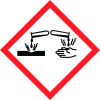
IÍconos en FDS

Información de la empresa
Empresa
MERCK S.A
Información GHS
Palabra clave
Advertencia
Hazard Codes
Declaraciones de peligro (CLP)
H290, H315, H319
Declaraciones de peligro
Código
Declaraciones
H290
May be corrosive to metals
Sección 2
SECCIÓN 2: Identificación de los peligros
No 1272/2008 Classification of the substance or mixture Classification according to Regulation (EC) No 1272/2008 Corrosive to Metals (Category 1), H290 Skin irritation (Category 2), H315 Eye irritation (Category 2), H319 For the full text of the H-Statements mentioned in this Section, see Section 16. 2.2 Label elements Labelling according Regulation (EC) No 1272/2008
Pictogramas de peligro
Signal word Warning Hazard statement(s) H290 May be corrosive to metals. H315 Causes skin irritation. H319 Causes serious eye irritation. Precautionary statement(s) P234 Keep only in original packaging. P264 Wash skin thoroughly after handling. P280 Wear protective gloves/ eye protection/ face protection. P302 + P352 IF ON SKIN: Wash with plenty of water. P305 + P351 + P338 IF IN EYES: Rinse cautiously with water for several minutes. Remove contact lenses, if present and easy to do. Continue rinsing. P332 + P313 If skin irritation occurs: Get medical advice/ attention. Supplemental Hazard none Statements Etiquetado reducido (<= 125 ml) ninguno(a)
Palabra de advertencia
Atención
Indicaciones de peligro
ninguno(a) Declaración(es) de ninguno(a) prudencia Suplementaria ninguno(a) del Peligro
2.3. Otros riesgos
Esta sustancia/mezcla no contiene componentes que se consideren que sean bioacumulativos y tóxicos persistentes (PBT) o muy bioacumulativos y muy persistentes (vPvB) a niveles del 0,1% o superiores.