
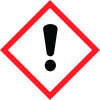
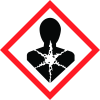
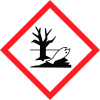
Nota: Ingredientes incluidos en la lista de productos químicos restringidos
EC/CAS
7778-50-9
Nombre del producto químico
Potassium dichromate
Concentración
N/A
EC/CAS
231-906-6
Nombre del producto químico
Kaliumdichromat
Concentración
N/A
Información General
Fecha de revisión:
2021-07-17
A. Nombre del producto
POTASIO DICROMATO P.A. EMSURE
número CAS
7778-50-9
REACH Número de registro
01-2119454792-32-XXXX
1.5 Uso recomendado:
usos
Número de emergencia
(56 2) 2777 1994
IÍconos en FDS
Información de la empresa
Empresa
Merck S.A
1.6 DIRECCIÓN DE CORREO ELECTRÓNICO
cservice-chile@sial.com
Información GHS
Palabra clave
Peligro
Hazard Codes
Declaraciones de peligro (CLP)
H272, H301, H312, H314, H317, H318, H330, H334, H335, H340, H350, H360FD, H372, H400, H410
Declaraciones de peligro
Código
Declaraciones
H272
May intensify fire; oxidiser
Sección 2
SECCIÓN 2: Identificación de los peligros
No 1272/2008 Classification of the substance or mixture Classification according to Regulation (EC) No 1272/2008 Oxidizing solids (Category 2), H272 Acute toxicity, Oral (Category 3), H301 Acute toxicity, Inhalation (Category 2), H330 Acute toxicity, Dermal (Category 4), H312 Skin corrosion (Sub-category 1B), H314 Serious eye damage (Category 1), H318 Respiratory sensitization (Category 1), H334 Skin sensitization (Category 1), H317 Germ cell mutagenicity (Category 1B), H340 Carcinogenicity (Category 1B), H350 Reproductive toxicity (Category 1B), H360FD Specific target organ toxicity - single exposure (Category 3), Respiratory system, H335 Specific target organ toxicity - repeated exposure, Inhalation (Category 1), Cardio-vascular system, H372 Short-term (acute) aquatic hazard (Category 1), H400 Long-term (chronic) aquatic hazard (Category 1), H410 For the full text of the H-Statements mentioned in this Section, see Section 16. 2.2 Label elements Labelling according Regulation (EC) No 1272/2008
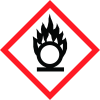
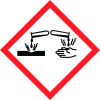
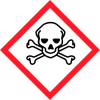
Pictogramas de peligro
Signal word Danger Hazard statement(s) H272 May intensify fire; oxidizer. H301 Toxic if swallowed. H312 Harmful in contact with skin. H314 Causes severe skin burns and eye damage. H317 May cause an allergic skin reaction. H330 Fatal if inhaled. H334 May cause allergy or asthma symptoms or breathing difficulties if inhaled. H335 May cause respiratory irritation. H340 May cause genetic defects. H350 May cause cancer. H360FD May damage fertility. May damage the unborn child. H372 Causes damage to organs (Cardio-vascular system) through prolonged or repeated exposure if inhaled. H410 Very toxic to aquatic life with long lasting effects. Precautionary statement(s) P210 Keep away from heat, hot surfaces, sparks, open flames and other ignition sources. No smoking. P260 Do not breathe dust/ fume/ gas/ mist/ vapors/ spray. P280 Wear protective gloves/ protective clothing/ eye protection/ face protection/ hearing protection. P303 + P361 + P353 IF ON SKIN (or hair): Take off immediately all contaminated clothing. Rinse skin with water. P304 + P340 + P310 IF INHALED: Remove person to fresh air and keep comfortable for breathing. Immediately call a POISON CENTER/ doctor. P305 + P351 + P338 IF IN EYES: Rinse cautiously with water for several minutes. Remove contact lenses, if present and easy to do. Continue rinsing. Supplemental Hazard none Statements Restricted to professional users. Etiquetado reducido (<= 125 ml)
Indicaciones de peligro
H301 Tóxico en caso de ingestión. H330 Mortal en caso de inhalación. H334 Puede provocar síntomas de alergia o asma o dificultades respiratorias en caso de inhalación. H317 Puede provocar una reacción alérgica en la piel. H340 Puede provocar defectos genéticos. H350 Puede provocar cáncer. H372 Provoca daños en los órganos tras exposiciones prolongadas o repetidas si se inhala. H314 Provoca quemaduras graves en la piel y lesiones oculares graves. H360FD Puede perjudicar a la fertilidad. Puede dañar al feto. Declaración(es) de prudencia P260 No respirar el polvo/ el humo/ el gas/ la niebla/ los vapores/ el aerosol. P280 Llevar guantes/ ropa de protección/ equipo de protección para los ojos/ la cara/ los oídos. P303 + P361 + P353 EN CASO DE CONTACTO CON LA PIEL (o el pelo): Quitar inmediatamente toda la ropa contaminada. Enjuagar la piel con agua. P304 + P340 + P310 EN CASO DE INHALACIÓN: Transportar a la persona al aire libre y mantenerla en una posición que le facilite la respiración. Llamar inmediatamente a un CENTRO DE TOXICOLOGÍA/ médico. P305 + P351 + P338 EN CASO DE CONTACTO CON LOS OJOS: Enjuagar con agua cuidadosamente durante varios minutos. Quitar las lentes de contacto cuando estén presentes y pueda hacerse con facilidad. Proseguir con el lavado. Suplementaria ninguno(a) del Peligro
2.3. Otros riesgos
Esta sustancia/mezcla no contiene componentes que se consideren que sean bioacumulativos y tóxicos persistentes (PBT) o muy bioacumulativos y muy persistentes (vPvB) a niveles del 0,1% o superiores.